May
12
Ulbrich Economic Update - Number 72 (May 2026)
Loading the
Elevenlabs Text to Speech
AudioNative Player...
Download the 18-page May Economic Update for a closer look at the latest economic trends affecting steel, commodities, and key global markets.
Continue reading for the Executive Summary.
ECONOMY
U.S. MANUFACTURING ACTIVITY HELD STEADY IN APRIL, as the ISM Manufacturing PMI remained at 52.7 for a fourth straight month while the prices index jumped to 84.6, its highest since April 2022. Factory output dipped 0.1% in March and overall industrial production fell 0.5%, yet factory orders rose 1.5%, the strongest monthly gain since November. Core capital goods orders jumped 3.3%, the largest increase since June 2020, while core shipments advanced 1.2%. Retail sales rose 1.7% in March, the biggest increase in a year, largely reflecting a record 15.5% surge in gasoline station receipts as fuel prices climbed. The Conference Board Consumer Confidence Index edged up 0.6 points to 92.8 in April, as the Present Situation Index slipped to 123.8 and the Expectations Index rose to 72.2, still below the recession-warning threshold of 80. New home sales rose 7.4%, while the median new home price dropped 6.2% from a year earlier to $387,400. The Conference Board Leading Economic Index fell 0.6% in March to 97.3, more than reversing February’s gain. Inflation accelerated sharply, with CPI rising 0.9% in March and 3.3% over the prior 12 months, led by a 10.9% jump in energy prices and a 21.2% surge in gasoline, while producer prices rose 0.5% on the month and 4.0% year-over-year. Private payrolls rose by 109,000 as the unemployment rate held at 4.3% in April.
STEEL
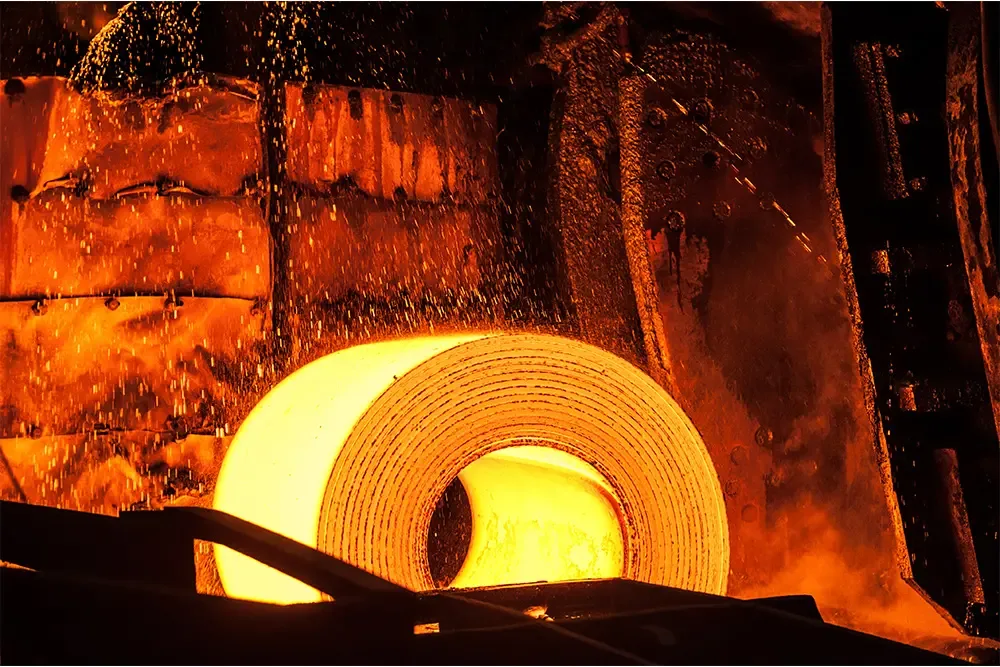
TRADE PRESSURE, DOMESTIC REINVESTMENT, AND SUPPLY-CHAIN LOCALIZATION KEPT STEEL IN FOCUS, as North American policy moves expanded through new tariff-relief rules, Canadian aid and antidumping actions, Mexican support for domestic steel, and fresh duties on Algerian long products. Producers also advanced capacity, restart, and expansion plans across key U.S. steel hubs, including Arkansas, Indiana, West Virginia, and Louisiana. Globally, Baosteel and POSCO activity underscored how geopolitical risk and decarbonization continue to shape long-term steel strategy.
AUTOMOTIVE
TARIFF RISK, RECALLS, AND NEXT-GENERATION MOBILITY SHAPED THE AUTO STORY, as U.S. trade pressure, Chinese market concerns, and shifting production strategies continued to affect automakers. Major recalls kept safety in focus, while robotaxi investment, China expansion, and the widening EV price gap added further competitive pressure.

ENERGY
FUEL DISRUPTION, POWER-MARKET STRESS, AND SECURITY-OF-SUPPLY DOMINATED ENERGY DEVELOPMENTS, as the International Energy Agency said the Iran war had become the biggest energy crisis in history, U.S. gas prices climbed sharply year-over-year, and Washington expanded Strategic Petroleum Reserve lending to help calm oil markets. PJM is considering a market overhaul as data center demand rises, Microsoft is reassessing its 2030 clean energy target, Europe has warned gas storage may miss its winter goal, and Australia is committing A$10B ($7.22B USD) to fuel reserves and energy resilience.
MEDICAL
DRUG APPROVALS, PIPELINE DEALS, AND FASTER-DEVELOPMENT TOOLS DROVE MEDICAL NEWSFLOW, as Pfizer, Merck, Axsome, and Regeneron advanced or won new approvals across oncology, HIV, Alzheimer’s-related agitation, and genetic hearing loss, while Cytokinetics, Mirum, Revolution Medicines, and Moderna posted important late-stage or access-related progress. Dealmaking remained active through Eli Lilly, Biogen, Sun Pharma, LEO Pharma, and Profluent, manufacturing investment expanded through AbbVie, Amgen, and AstraZeneca, and regulators added to the shift through real-time trial monitoring, psychedelic research support, and a looser medical marijuana framework.

AEROSPACE
DEFENSE BUILDOUTS, SATELLITE INVESTMENT, AND ALLIED REARMAMENT KEPT AEROSPACE ACTIVE, as the U.S. accelerated Golden Dome missile defense work, hypersonic and launcher awards to Castelion and Leidos, and broader satellite positioning through Boeing’s new platform and Amazon’s $11.57B Globalstar deal. Allied cooperation also deepened through Japan’s defense export overhaul and potential U.S. weapons sales to Germany and the Netherlands. Joby also advanced commercial air taxi testing in New York, pointing to continued momentum in next-generation aerospace mobility.

COMMODITIES
CRITICAL MINERALS, METALS VOLATILITY, AND FOOD-SUPPLY RISK MOVED COMMODITY MARKETS, as aluminum volatility, U.S.-EU minerals coordination, new strategic mineral projects, and China’s partial reopening of yttrium exports kept raw materials in focus. Agricultural pressure also intensified, with rice supplies strained by higher input costs and El Niño risk.

OVERSEAS
TRADE REALIGNMENT, INDUSTRIAL INVESTMENT, AND TECHNOLOGY PARTNERSHIPS SHAPED GLOBAL MARKETS, as the U.S. and EU worked to stabilize trade and critical minerals ties, Britain secured new life sciences investment, and Stellantis deepened its AI alliance with Microsoft. Across Asia and Europe, activity from Hyundai, Xpeng, Samsung Biologics, Tesla, and Univity showed how companies are repositioning for a more fragmented global market.

Want to learn more? Download the full 18-page May Economic Update
Subscribe to Our Newsletter
Stay up to date on markets and industries driven by stainless steel and other key manufacturing materials. Subscribe to receive the Ulbrich Economic Update delivered monthly to your inbox.