Apr
15
Ulbrich Economic Update - Number 71 (April 2026)
Loading the
Elevenlabs Text to Speech
AudioNative Player...
Download the 17-page Economic Update for the full details of recent economic trends impacting the steel and commodities markets, as well as the associated industries across the globe.
Continue for the Executive Summary.
ECONOMY
U.S. MANUFACTURING ACTIVITY PICKED UP IN MARCH, as the ISM Manufacturing PMI rose to 52.7 from 52.4 in February, its highest since August 2022, while supplier deliveries slowed sharply to 58.9, prices paid jumped to 78.3, and new orders eased to 53.5. Core capital goods orders were unchanged in January, core shipments slipped 0.1%, new home sales plunged 17.6%, and construction spending fell 0.3% in January. Retail sales rose 0.6% in February, core retail sales were up 0.5%, and The Conference Board Consumer Confidence Index edged up to 91.8 in March as the Present Situation Index climbed to 123.3, though Expectations slipped to 70.9, still below the recession-warning threshold of 80. The Conference Board Leading Economic Index was down another 0.1% in January to 97.5 and down 1.3% over the prior six months, even as the Coincident Economic Index rose 0.3% to 115.3 and The Conference Board cut its 2026 U.S. GDP growth forecast to 2.0% year-over-year. Inflation remained firm and showed signs of building, with CPI up 0.3% in February and 2.4% over the prior 12 months, while producer prices rose 0.7% on the month and 3.4% year-over-year. Nonfarm payrolls increased by 178,000 in March, February payrolls were revised up to 133,000, January gains were revised to 160,000, and the unemployment rate dipped to 4.3%.
STEEL
TARIFF BROADENING, DOMESTIC SUPPLY TIGHTNESS, AND CAPACITY MOVES KEPT METALS IN FOCUS, as the administration shifted steel and aluminum derivative tariffs to the full customs value of finished imports and U.S. Steel restarted Granite City’s B furnace to help offset planned downtime at Gary Works. Friedman added more processing capacity in Sinton, U.S. Steel began soliciting bids for a $4B mini-mill, and Nippon secured 900B yen ($5.6B USD) in financing tied to its U.S. Steel acquisition. Mexico imposed preliminary duties on hot-rolled steel from China and Vietnam, and Canada’s Buy Canada push gained visibility.
AUTOMOTIVE
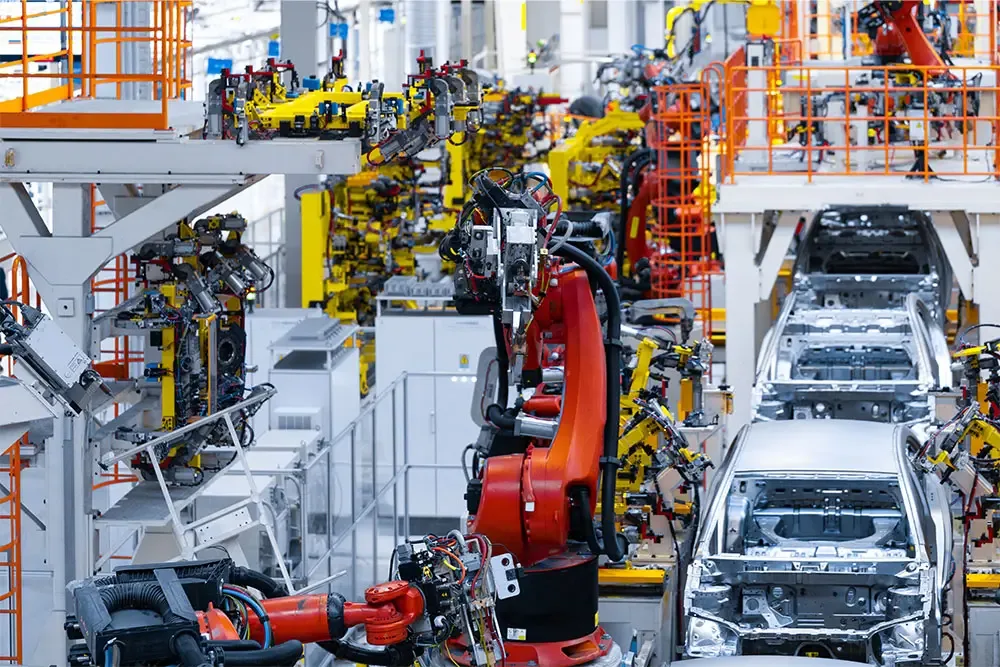
LOCALIZATION, RECALLS, AND AUTONOMY SHAPED THE AUTO STORY, while Mercedes-Benz committed $4B to Alabama, Minth planned a $430M Alabama supplier site, and Hyundai, Toyota, and Nissan signaled further North American localization. EV demand remained uneven: U.S. adoption cooled after tax credit changes, but higher fuel costs lifted interest across Asia/Pacific, and Tesla pushed deeper into Japan while Volvo expanded Lynk & Co distribution in Europe.
ENERGY
OIL SHOCKS, POWER SECURITY, AND DATA CENTER DEMAND DOMINATED ENERGY DEVELOPMENTS, as physical crude prices surged near $150 per barrel and U.S. gasoline topped $4 a gallon. Diablo Canyon received a 20-year federal license extension while Microsoft, Chevron, and Engine No. 1 moved to secure gas-fired power for AI infrastructure. TotalEnergies and Masdar formed a $2.2B Asia-focused renewables venture, Tesla won approval to supply UK homes with electricity, and China’s coal additions climbed to an 18-year high even as renewables expand.
MEDICAL
PHARMA DEALMAKING, NEW APPROVALS, AND AI-DRIVEN DEVELOPMENT LED THE MEDICAL NEWSFLOW, as Eli Lilly stayed at the center with its up-to-$7.8B Centessa acquisition, an up-to-$2.75B Insilico collaboration, U.S. approval for its oral weight-loss drug Foundayo, and a $3B China manufacturing commitment. Gilead bought Ouro Medicines for more than $2B, Merck posted positive late-stage cholesterol data, and AstraZeneca reported strong liver cancer trial results. Rhythm won the first U.S. approval for obesity linked to brain damage, while Butterfly received FDA clearance for an AI pregnancy ultrasound tool, the FDA pushed alternatives to animal testing, and U.S. officials moved to monitor microplastics and pharmaceuticals in drinking water.

AEROSPACE
DEFENSE MODERNIZATION AND SPACE REPOSITIONING HELPED SHAPE AEROSPACE, as GE Aerospace committed another $1B to U.S. manufacturing, Anduril prepared to begin FURY drone production at its $1B Ohio plant, and Shield AI raised $2B at a $12.7B valuation to expand autonomous flight software. Military AI adoption advanced further with the Pentagon moving to make Palantir’s Maven a core program. Finnair chose Embraer for a €2B fleet renewal, Amazon and Delta teamed up on satellite-backed in-flight Wi-Fi, and NASA overhauled Artemis around a $20B lunar surface base.

COMMODITIES
CRITICAL MINERALS, FOOD INFLATION, AND RESOURCE SECURITY MOVED MARKETS, as REalloys and U.S. Critical Materials signed a domestic rare earth memorandum, the U.S. and Japan launched a new critical minerals action plan, and Glomar with Cobalt Blue proposed a U.S. deep-sea mineral refinery while Zambia and Chile advanced copper-centered expansion strategies. World food prices rose to a six-month high, while India urged manufacturers to conserve energy and materials.

OVERSEAS
CROSS-BORDER INVESTMENT AND TRADE REALIGNMENT KEPT GLOBAL FLOWS IN FLUX, as the U.S. trade deficit stayed near record levels despite renewed tariffs, Britain finalized a tariff-free pharmaceutical deal with the U.S., and Asian borrowers returned to debt markets with about $2.8B in high-grade issuance led by LG Energy Solution. GM added $600M to South Korea while AstraZeneca and Lilly deepened China manufacturing commitments.
Subscribe to Our Newsletter
Stay up to date on markets and industries driven by stainless steel and other key manufacturing materials. Subscribe to receive the Ulbrich Economic Update delivered monthly to your inbox.